Engineered Timber vs Engineered Vinyl: Which Suits Your Home?
Both engineered timber and engineered vinyl have improved enormously over the past decade. Both can look genuinely premium. The right choice between them comes down to the room, not the trend.

Engineered Timber
Real Material, More Stable Construction
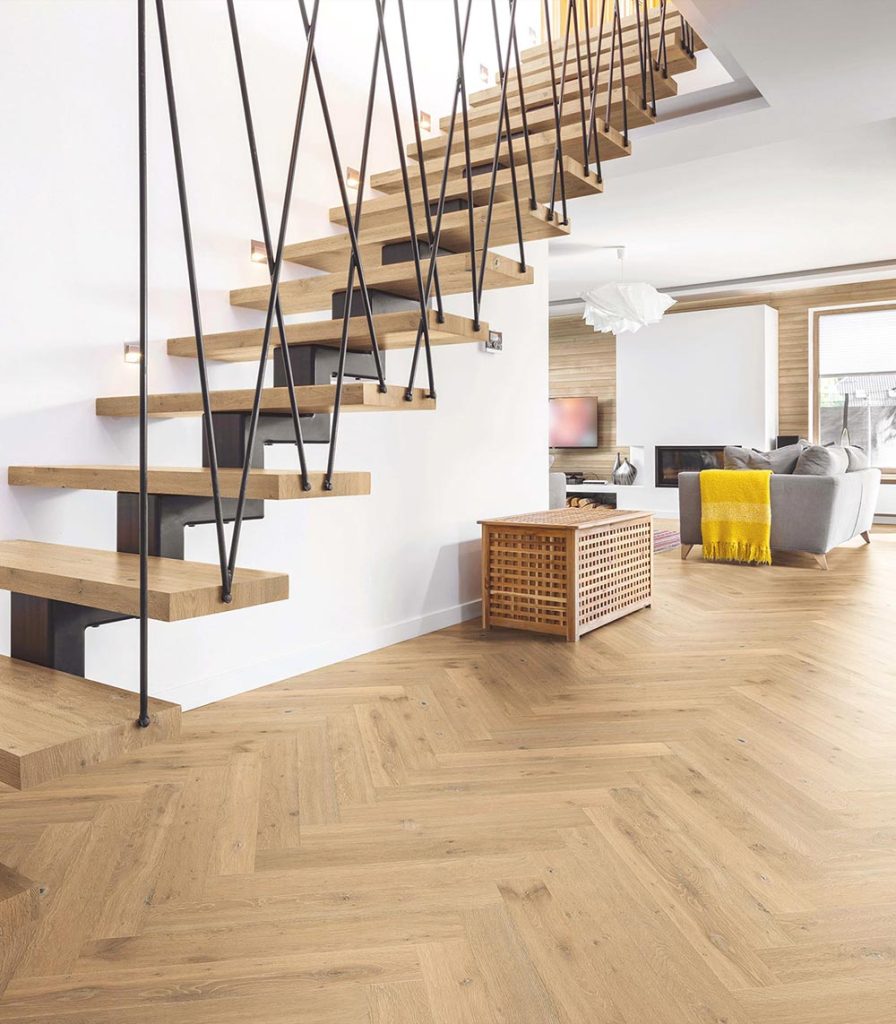
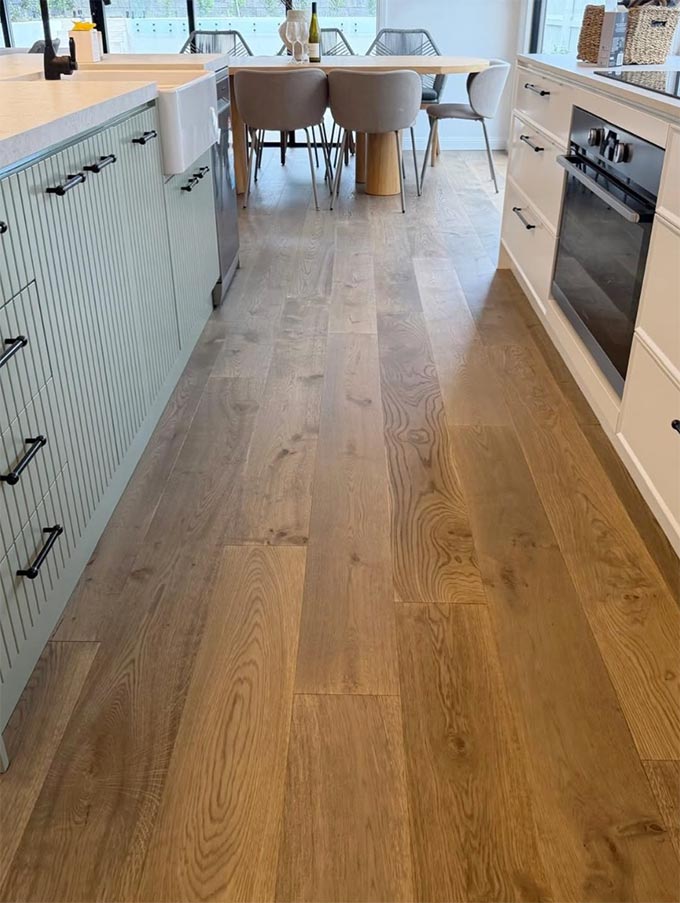
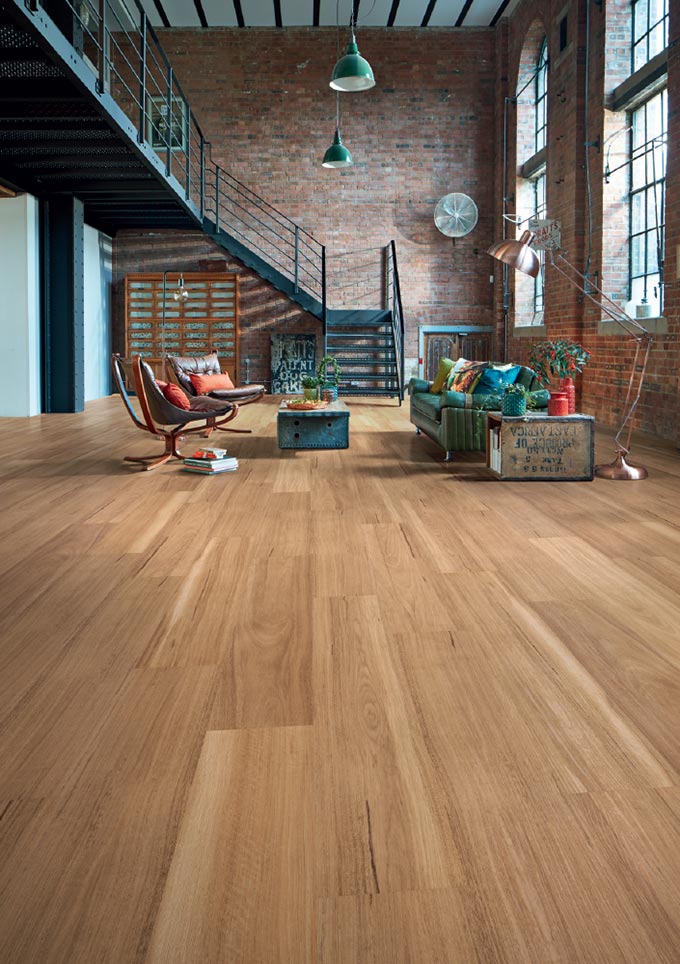
Engineered timber has a real timber wear layer over a stable, layered base, which makes it significantly more dimensionally stable than solid timber through temperature and humidity changes, relevant for both Geelong’s coastal humidity and Ballarat’s colder, drier winters. It carries genuine resale appeal that’s hard to fully replicate, because it is, at the surface, real wood.
What it’s not built for: sustained water exposure. Bathrooms and laundries are not the place for it.
Engineered Vinyl
Built for wet busy rooms
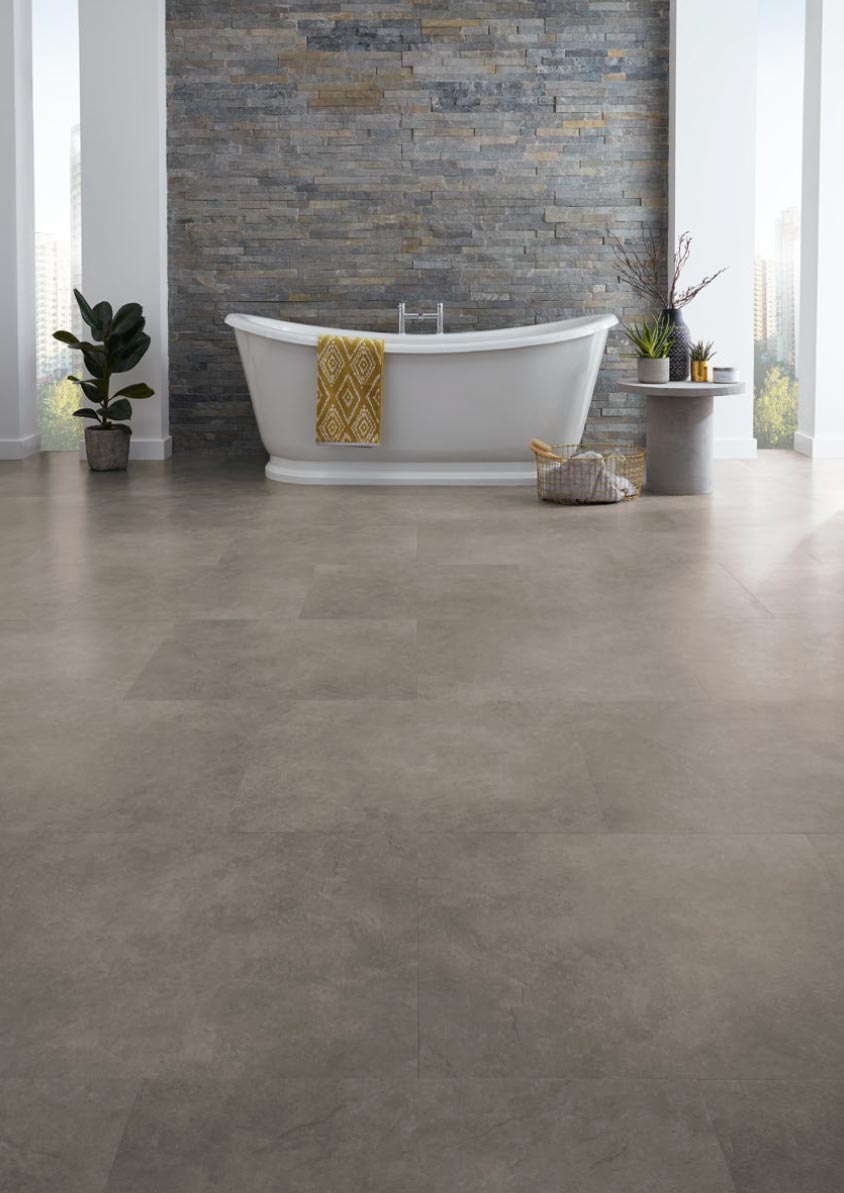
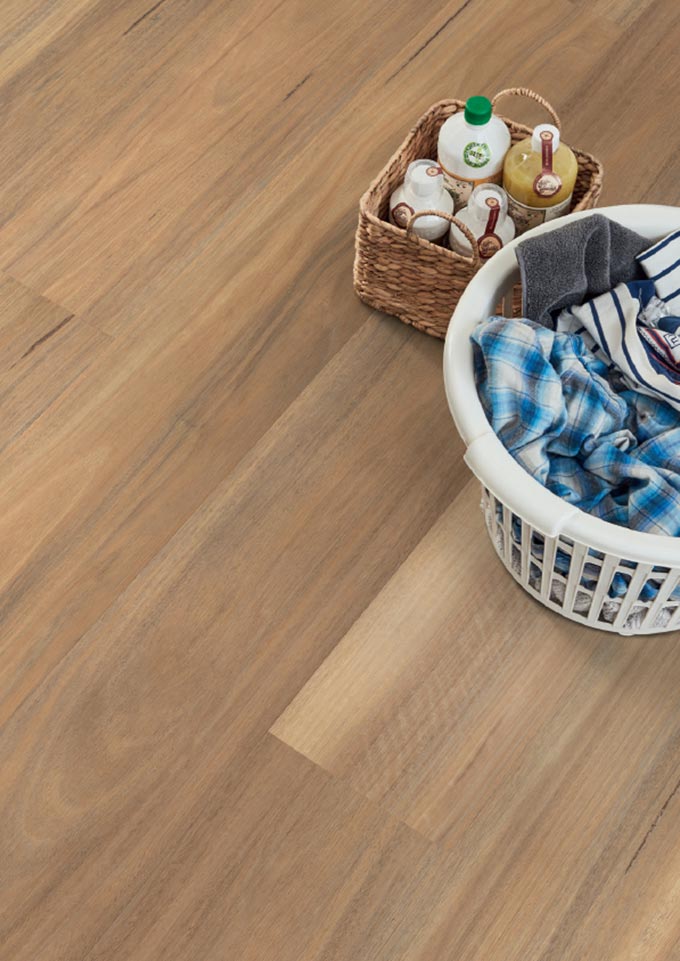
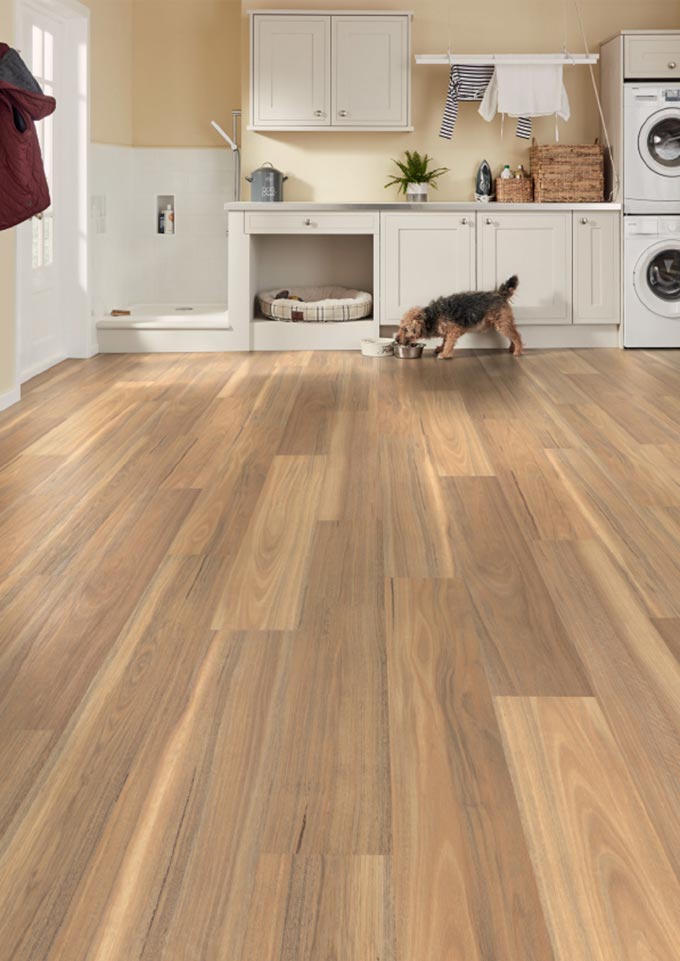
Engineered vinyl is fully water-resistant, which makes it the stronger choice for bathrooms, laundries, and busy family living areas where spills are inevitable rather than occasional. The print and texture technology has improved enough that, from a few steps back, the better ranges are difficult to distinguish from real timber.
Head to Head Comparison:
Here is a breakdown of how they compare structurally and functionally:
The difference between engineered timber and engineered vinyl flooring comes down to authenticity versus ultimate durability. While engineered timber uses a layer of genuine hardwood, engineered vinyl is a fully synthetic product designed to mimic wood while being completely waterproof.
FEATURE | ENGINEERED TIMBER | ENGINEERED VINYL (Rigid Core) |
|---|---|---|
Top Layer (The Surface) | Real Wood Veneer (e.g., Oak, Spotted Gum). Every plank has a unique, natural grain. | Photographic Image protected by a highly durable, transparent polymer wear layer. |
Core Material | Cross-layered plywood or High-Density Fiberboard (HDF). | Stone Plastic Composite (SPC) or Wood Plastic Composite (WPC). |
Water Resistance | Water-resistant but vulnerable. Spills must be wiped up quickly to prevent the wood from swelling or staining. | Generally Lower |
Scratch & Dent Resistance | Can dent from heavy objects and scratch from pet claws, just like solid hardwood. | Highly realistic visually, but can feel harder and slightly colder/more synthetic underfoot. |
Refinishing | Depending on the thickness of the veneer, it can usually be lightly sanded and refinished 1-3 times. | Cannot be refinished. If severely damaged, the individual plank must be replaced. |
Cost | High. It is a premium flooring option. | Low to Medium. Highly cost-effective compared to real timber. |

CONSIDERATION | ENGINEERED TIMBER | ENGINEERED VINYL |
|---|---|---|
Water Resitance | Limited | High |
Resale Appeal | Strong (real timber) | Good, Improving |
Cost | Generally Higher | Generally Lower |
Most Suitable Rooms | Living Areas, Bedrooms | Bathrooms, Laundries, Kitchens |
Climate Stability | Good (Layered Constructions) | Excellent |
A Practical Approach:
Mix them by room
Plenty of Geelong and Ballarat homes use engineered timber through living areas and bedrooms, and switch to engineered vinyl in wet zones, getting the resale benefit of real timber where it matters most, without the maintenance risk in rooms where water is a daily fact of life.
Talk to the Design Centre
Plenty of Geelong and Ballarat homes use engineered timber through living areas and bedrooms, and switch to engineered vinyl in wet zones, getting the resale benefit of real timber where it matters most, without the maintenance risk in rooms where water is a daily fact of life.